

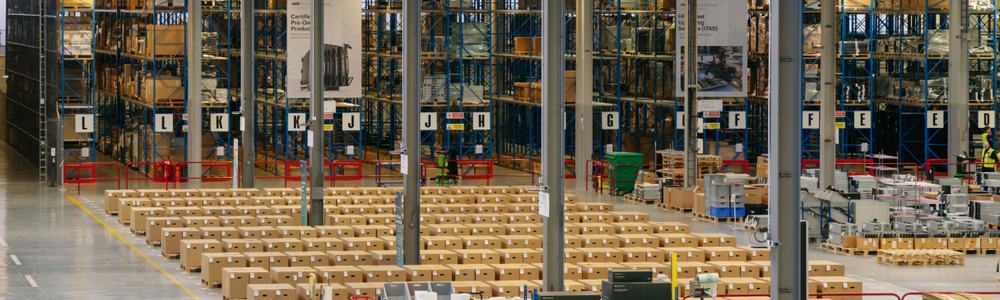
ERSKINE, SCOTLAND – Hewlett Packard Enterprise (HPE) sees opportunity in the refurbished market for Juniper Networks equipment, as its upcycling efforts see strong momentum in the ongoing AI supply crunch.
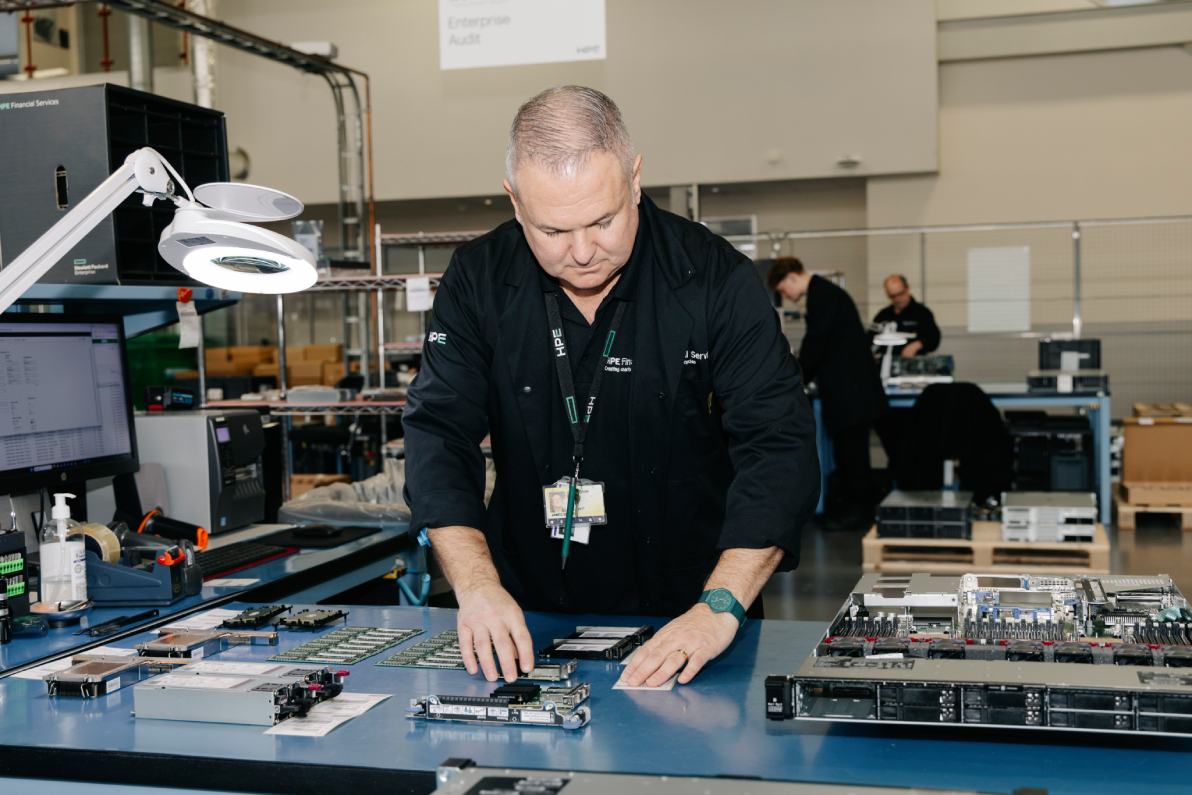
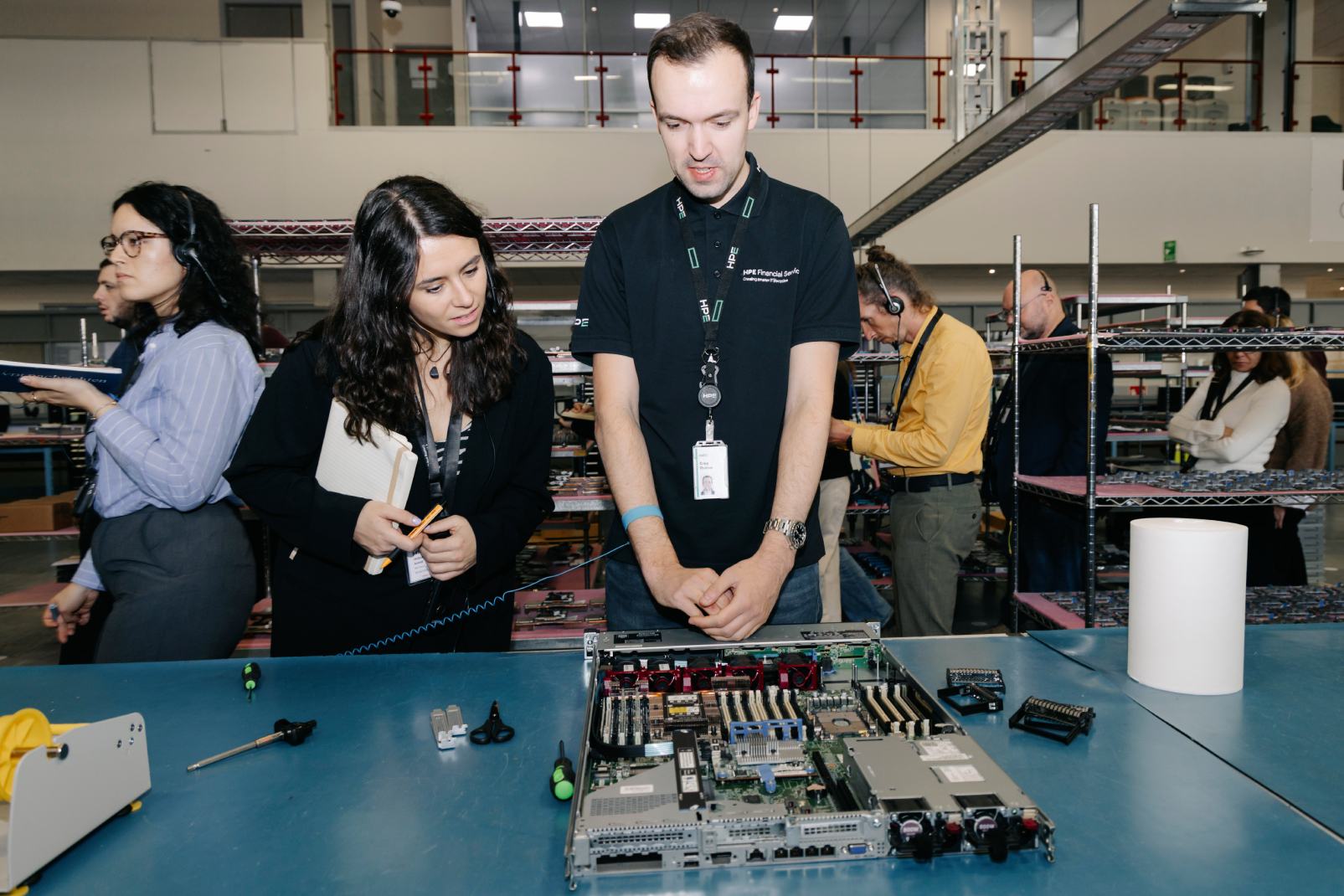
Those efforts are represented by HPE’s Technology Renewal Center (TRC) in Scotland, which SDxCentral was granted behind the scenes access to this week. HPE has two such centers, with another to be found in Andover, Massachusetts.
Matt Harris, SVP and MD for HPE U.K., Ireland, the Middle East, and Africa, told this title that the Juniper acquisition brings “new and untapped ground” for HPE Financial Services (HPEFS), the firm’s captive financing and asset management arm.
“The Juniper pipeline that we built is absolutely significant,” Harris said. “We are speaking to customers about broader sets of problems, including the end of that chain … I think probably when products reach end of life, it's going to be a bigger opportunity. That is another route and value that what was Juniper, now HPE Networking, can leverage.”
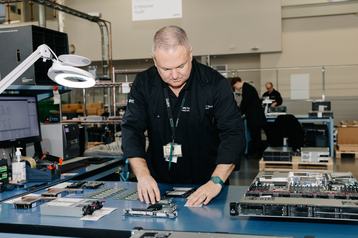
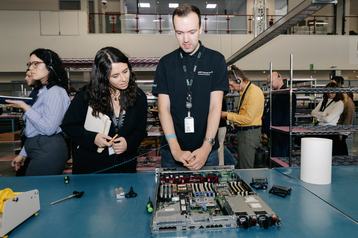
The SVP’s comments were made in a media panel at the TRC, a 240,000 square feet facility that refurbishes equipment ranging from laptops to servers, from a variety of vendors including Cisco, HP, and Apple. Maeve Culloty, president & CEO, HPEFS, added that the center "recertifies and rewarrants" GPUs from Nvidia, AMD, and Intel, bringing them to "their second life."
According to HPE, its TRCs processed 4.3 million tech assets in 2025, redirecting 84% back into the secondary economy. Since 2021, HPEFS has accumulated $1.25 billion back into customer IT budgets through lifecycle financing, with 85% of servers coming through TRC doors ending up upcycled and returned to active use.
Both facilities play a key role in HPE's goal to become net zero by 2040. Karim Abou Zahab, sustainable transformation technologist for HPE, told press that a "lot of customers miss that when we're talking about sustainability, we're mainly talking about efficiency," with HPE viewing the concepts as interlinked on a fundamental business level.
Established in 1981 by Compaq, later part of HP, the Erskine facility has expanded in recent years through HP's HPE spin-out to handle both an uptick in HPEFS clients and the ongoing compute demand fueled by AI.
Harris added firms were reevaluating budgets in light of rising memory costs, as well as the “economic hit” of rising VMware prices.
“What we have seen in 2026, and we believe is continuing 2027, the demand is not slowing down,” Harris said. “Costs continue to go up … Think about mid-market and local government, as an example, who are getting now costed out from buying their basic needs, and they're having to think again, and they're thinking in a few ways. One is they are probably sweating assets longer, but that is then creating potential for security vulnerabilities and support life vulnerabilities.
“They're trying to cost more money they've got to spend in new areas which they haven't considered in budgets previously at that level, and therefore thinking again becomes really important, and actually I think that's changing the perception of whether I need to, or I can even afford to buy new, where maybe I'm instead going to get a refurbished, very professional asset from HP, as an example, and it can deliver for me.”
SDxCentral will detail its TRC visit more in a forthcoming piece.




Comments